
Youth Jiu-Jitsu gives kids a place to move, learn real skills, and feel like part of a team in a city that never slows down.
San Jose parents usually start with a practical question: what activity will my child actually stick with? Youth Jiu-Jitsu tends to work because it is structured, physical, and interesting in a way that keeps kids engaged past the first few weeks.
We also like that it is a long-game activity. Your child can begin as a total beginner, learn step by step, and keep growing without needing to be the fastest, biggest, or loudest athlete in the room. In Youth Jiu-Jitsu, progress comes from consistency and curiosity, and that is a pretty refreshing formula.
Another reason this matters right now is that youth jiu-jitsu is not a niche hobby anymore. Current competition data shows a huge ecosystem, with some 2026 databases reporting more than 160,000 fighters, hundreds of thousands of matches, and thousands of tournaments and academies worldwide. Major youth events can draw hundreds to over a thousand competitors, and kids divisions often have deep brackets, which tells us something important: children are training, testing themselves, and building communities around the sport.
Why Youth Jiu-Jitsu is growing so fast
Youth Jiu-Jitsu sits in a sweet spot between sport, fitness, and practical self-defense. It is technical enough to be mentally engaging, but physical enough that kids get real exercise without feeling like they are doing a workout program.
The sport side is also very real. In major youth events, submission rates have been reported roughly in the mid-40 percent to high-50 percent range depending on the rules and tournament. That means a lot of matches still go to points or decision, so fundamentals, control, and strategy matter just as much as flashy moves. For parents, that is reassuring: the activity rewards thoughtful skill-building, not just aggression.
At the same time, youth tournaments have become more frequent and visible, and some 2026 overviews suggest children’s events often draw around 50 to 75 competitors per tournament on average. That steady participation creates a clear pathway: kids can train for health and confidence, and if they want more, there are organized opportunities to compete and measure progress.
Fitness benefits that show up outside the gym
Most parents can spot the changes pretty quickly, but the best ones are not just physical. Youth Jiu-Jitsu develops athleticism that carries over into daily life and other sports, and it does it through movement that feels playful and challenging rather than repetitive.
Here are a few fitness outcomes we see build over time:
• Better coordination and body awareness through controlled movement, balance, and partner drills
• Functional strength in the core, hips, and upper body from grappling-specific positions
• Cardiovascular endurance from short, focused rounds that build intensity gradually
• Mobility and flexibility from learning safe ranges of motion and technical escapes
• Healthier habits as kids start taking pride in practice, recovery, and consistency
In a screen-heavy world, it is also just nice to watch kids leave class a little tired in a good way. Not exhausted, not overwhelmed, just pleasantly spent and more settled.
Confidence, bullying prevention, and calm decision-making
Parents often ask if jiu-jitsu helps with bullying. We take that question seriously, because the goal is never to turn kids into fighters. Our goal is to give your child the confidence and skills to set boundaries, stay composed, and respond appropriately when situations get uncomfortable.
Youth Jiu-Jitsu helps in three practical ways. First, kids practice staying calm under pressure. Second, they learn how leverage and position work, so size matters less than technique. Third, they experience small, safe challenges every class, and that repeated experience builds genuine self-belief.
This is also where the social side starts to shine. When kids feel more confident in their bodies and their ability to handle close contact safely, they tend to carry themselves differently at school. That can reduce the “easy target” vibe that bullying often feeds on, while still keeping your child grounded and respectful.
The friendships are not accidental, they are built into the training
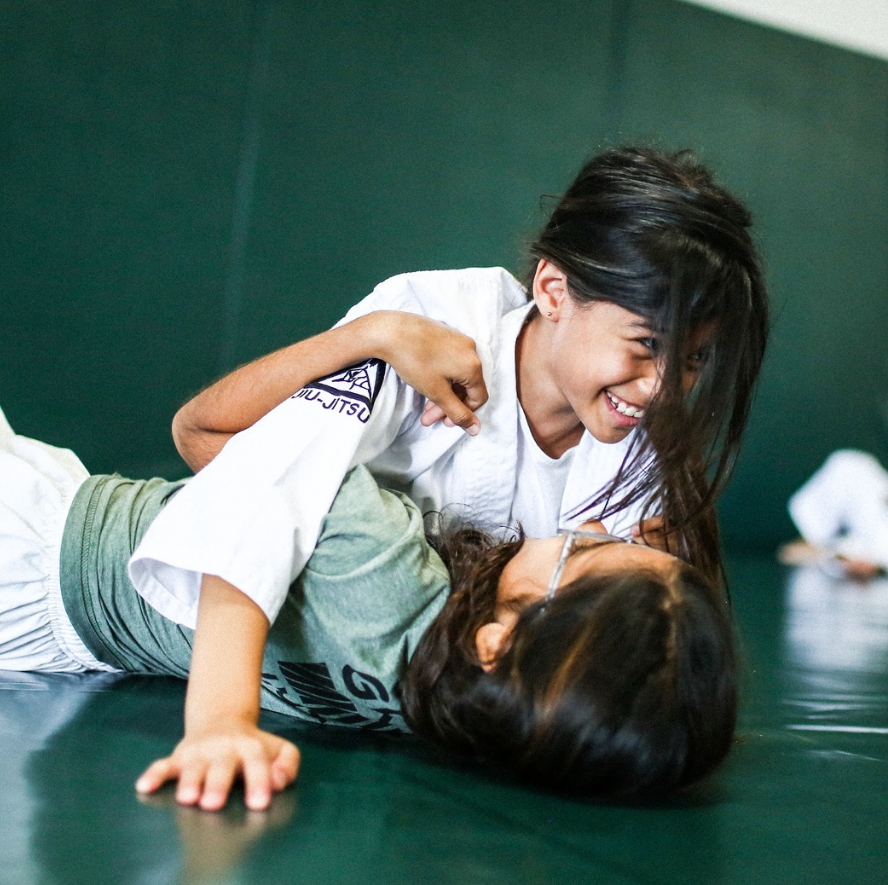
Team sports build friendships through shared goals. Youth Jiu-Jitsu builds friendships through shared effort, partner work, and a culture of helping each other improve. Kids rotate partners, learn to communicate, and practice being both a good teammate and a good training partner.
Because training is partner-based, kids get frequent low-stakes social reps. They learn how to introduce themselves, make eye contact, ask questions, and problem-solve together. For shy kids, that can be a surprisingly gentle way to come out of their shell. For energetic kids, it is a place where enthusiasm has structure.
Over weeks and months, those repeated interactions create something that feels a lot like a second community. And for many families, that becomes one of the best parts of Youth Jiu-Jitsu in San Jose: your child is not just attending a class, your child is joining a consistent group.
What we focus on in our youth program
We run youth classes with a clear plan: fundamentals first, safety always, and steady progress that keeps kids motivated. That means we teach techniques in age-appropriate steps, reinforce good habits, and keep the room organized so kids can learn without chaos.
In general, our youth curriculum emphasizes:
• Positional control and escapes so kids learn how to stay safe and reset
• Basic takedown awareness and how to fall responsibly at a beginner level
• Guard, mount, and back-control fundamentals with simple, repeatable details
• Submissions taught with control, tapping awareness, and clear boundaries
• Character skills like patience, listening, and resilience when things get challenging
We also keep the environment positive. Kids should feel supported, but not coddled. There is a difference, and it matters.
Gi vs no-gi for kids: what is the difference?
Parents hear “gi” and “no-gi” and assume one is more advanced. In reality, both can be excellent for kids, and each teaches slightly different lessons.
Gi training uses the traditional uniform and includes grip fighting on sleeves and collars. It tends to slow things down a little, which can help beginners learn structure and control. No-gi training is done without the gi, often with rash guards and shorts, and it can feel faster because grips change and movement becomes more fluid.
If you are choosing where to start, we usually recommend beginning with whatever fits your schedule and helps your child train consistently. Consistency beats the perfect choice every time.
What to expect in your child’s first class
The first day is usually a mix of excitement and nerves, and that is normal. We keep the onboarding simple and welcoming, and we explain expectations clearly so kids understand what “good training” looks like.
A typical first class often includes a warm-up, a technique section, and partner practice that is closely supervised. We prioritize safety, tapping, and controlled movement from the start. If your child is brand new to sports or just unsure about close-contact activities, we guide them gradually and match partners thoughtfully.
Parents also ask if they can watch. In most cases, yes, especially early on when your child is getting comfortable. We want you to feel informed, not left guessing.
How often should kids train each week?
For most families, two classes per week is a strong starting point. It is enough repetition to build momentum, but not so much that it overwhelms school and other responsibilities.
If your child falls in love with it, three days per week can accelerate progress, especially once basic movement and class routines feel familiar. One day per week can still help, but improvements may feel slower because the body needs repetition to “lock in” new patterns.
The best training schedule is the one your family can sustain. When you check the class schedule page, look for times that fit your after-school rhythm, not the “ideal” plan you will abandon in a month.
Recreational training vs competition: both paths can be healthy
Not every child needs to compete, and we never treat competition as the only sign of progress. Youth Jiu-Jitsu already delivers benefits through consistent training: fitness, confidence, discipline, and friendships.
That said, kids who enjoy measurable goals often love the tournament experience. The larger youth tournament scene makes it easier to find events with real structure, clear divisions, and meaningful brackets. With hundreds to over a thousand competitors at some major events and steady participation across the sport, competition can become a motivating milestone rather than a stressful ordeal.
We approach competition as an extension of learning. Matches that go to decision teach patience and strategy. Matches that end in submissions show that technique is working. Either way, kids learn to handle nerves, win with humility, and lose with perspective.
A quick note for families interested in adult training too
Many parents start by enrolling a child, then realize they want training for themselves as well. That is one of the most practical ways to keep fitness in the routine, because you are already committed to the drive and the weekly schedule.
If you have been searching Adult Jiu-Jitsu San Jose, CA options, it helps to know that adult training complements what kids do: fundamentals, safe progression, and a supportive room culture. When the whole family trains, accountability gets easier, and the conversations at home get more interesting than “how was practice.”
Ready to Begin
If you want an activity that builds fitness and real friendships at the same time, Youth Jiu-Jitsu checks a lot of boxes for San Jose families. It is structured, challenging in a healthy way, and it grows with your child, whether your goal is confidence, self-defense skills, competition, or simply a more active week.
At Gracie Jiu-Jitsu San Jose, we keep the focus on fundamentals, safety, and a community that makes kids want to come back. If you are looking for Youth Jiu-Jitsu San Jose, CA families can commit to long-term, we would love to help you take the first step.
Move from reading to training and join a Jiu-Jitsu class at Gracie Jiu-Jitsu San Jose today.